Cracker Barrel Meatloaf Recipes: Easy Copycat Recipe with Ingredients, Tips & Variations
There’s something deeply comforting about walking into a Cracker Barrel and smelling that homestyle meatloaf baking away, slathered in a sweet tomato glaze that caramelizes just right. It’s the kind of dish that reminds you of Sunday dinners at grandma’s house, even if you’ve never actually had her cooking. That’s exactly why so many home cooks go searching for cracker barrel meatloaf recipes they can recreate in their own kitchen.
The good news is you don’t need a restaurant-grade kitchen or a secret family cookbook to pull this off. With ground beef, a handful of pantry staples, and a simple glaze made from ketchup, brown sugar, and a splash of vinegar, you can get remarkably close to that signature Cracker Barrel flavor. It’s hearty, slightly sweet, savory, and satisfying in a way that feels like a hug on a plate.
Whether you’re cooking for a busy weeknight or a cozy weekend gathering, this meatloaf delivers nostalgia and flavor in equal measure. Grab your loaf pan, and let’s get started on making this classic comfort food right at home.
Cracker Barrel Meatloaf Recipes
Now that your ingredients and tools are ready, it’s time to bring everything together. Start by preheating your oven to 350°F so it’s fully heated by the time your loaf is shaped and ready to bake.
In your mixing bowl, combine the ground beef, crushed Ritz crackers, diced onion, diced green bell pepper, eggs, milk, and shredded cheddar cheese. Add your seasonings at this stage too, then use your hands to gently mix everything until just combined. Overmixing can make the meatloaf dense, so stop as soon as the ingredients look evenly distributed.
Transfer the mixture into your loaf pan, pressing it down gently to remove air pockets while keeping the texture light. If you’re using a baking sheet instead, shape the mixture into a freeform loaf directly on the lined pan.
Before baking, whisk together your tomato glaze ingredients in a small bowl. Spread about half of the glaze over the top of the meatloaf, saving the rest for later in the baking process.
Bake the meatloaf for about 45 minutes, then pull it out and brush on the remaining glaze. This second layer helps build that sticky, caramelized crust Cracker Barrel is known for.
Return the loaf to the oven and continue baking until your meat thermometer reads 160°F internally, which usually takes another 15 to 20 minutes total.
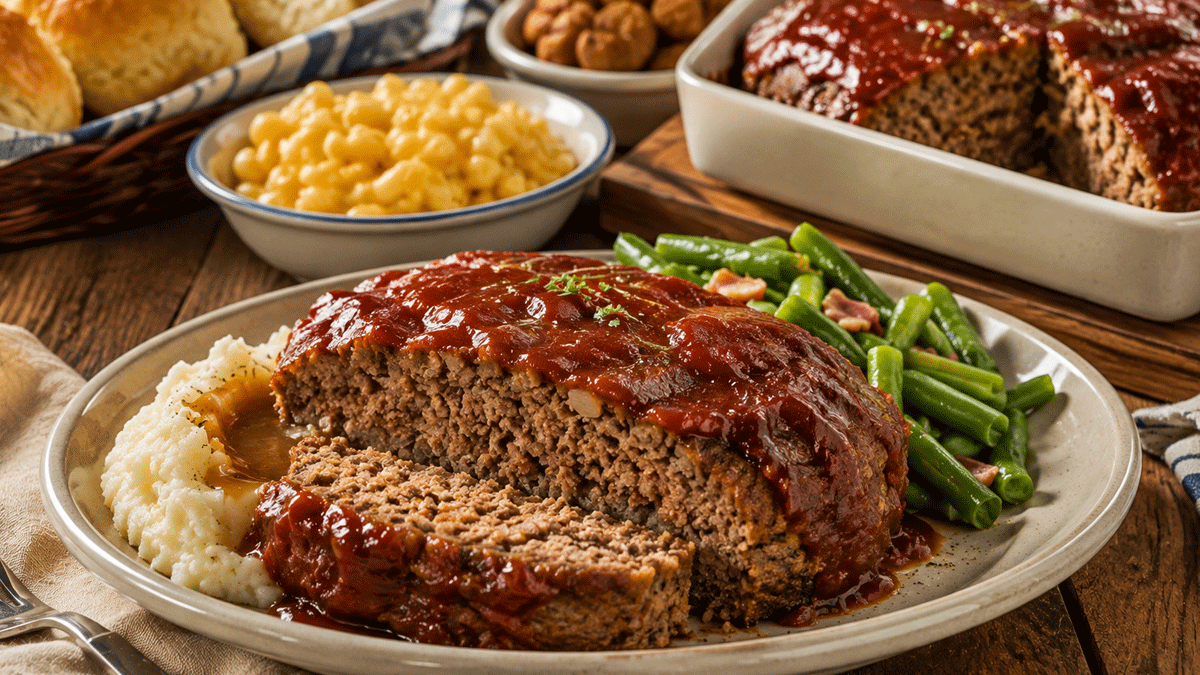
Once done, let the meatloaf rest for about 10 minutes before slicing. This resting period allows the juices to redistribute, giving you clean slices instead of a crumbly mess. Serve warm alongside mashed potatoes or green beans for the full Cracker Barrel experience at home.
Ingredients You’ll Need
Getting the flavor right starts with using the same base ingredients Cracker Barrel relies on for their classic meatloaf. Ground beef is the foundation here, and going with an 80/20 blend gives you that juicy, tender texture without the loaf falling apart or turning greasy. Leaner cuts tend to dry out during baking, so don’t skimp on the fat content this time.
| Ingredient | Purpose |
|---|---|
| Ground beef (80/20) | Base protein, keeps loaf juicy |
| Ritz crackers | Binder, adds buttery flavor |
| Onion | Aromatic base flavor |
| Green bell pepper | Adds texture and freshness |
| Eggs | Binds mixture together |
| Milk | Keeps meatloaf moist |
| Cheddar cheese | Adds creamy, savory richness |
| Seasonings (salt, pepper, garlic powder) | Enhances overall flavor |
| Glaze (ketchup, brown sugar, vinegar) | Signature sweet-tangy topping |
Instead of plain breadcrumbs, crushed Ritz crackers are the real secret weapon. They add a subtle buttery richness and help bind everything together while keeping the texture soft rather than dense. If you’re out of Ritz, regular breadcrumbs work as a backup, though the flavor won’t be quite as rich.
Onion and green bell pepper bring the aromatic base that makes this meatloaf taste homemade instead of bland. Dicing them finely ensures they cook down and blend seamlessly into the meat mixture rather than leaving crunchy bites behind.
Eggs and milk work together as the binding agents, keeping the loaf moist while helping all the ingredients hold their shape once sliced. Cheddar cheese is a comforting addition that melts into the mixture, adding a creamy, savory depth you don’t always expect in a traditional meatloaf.
Seasonings round out the flavor profile, and the glaze is really what ties the whole dish together with that sweet-tangy finish everyone loves.
With these staples gathered, you’re ready to build a meatloaf that tastes just like the one you’d order at Cracker Barrel itself.
Kitchen Tools Required
Before you dive into mixing ingredients, it helps to have the right tools on hand so the whole process goes smoothly. None of these are fancy or hard to find, which is part of what makes this recipe so approachable for home cooks of any skill level.
| Tool | Purpose |
|---|---|
| Mixing bowl | Combines all ingredients evenly |
| Loaf pan | Shapes meatloaf, ensures even baking |
| Baking sheet | Alternative for a crispier crust |
| Measuring cups and spoons | Ensures accurate ingredient ratios |
| Meat thermometer | Confirms safe internal temperature |
A large mixing bowl is where all the magic starts. You’ll need enough room to combine the ground beef, crushed crackers, diced vegetables, eggs, and cheese without everything spilling over the sides. Using your hands to mix is often easiest, so a wide, deep bowl gives you the space to work the ingredients together evenly.
A loaf pan is the classic choice for shaping your meatloaf, giving it that traditional rectangular shape with clean, sliceable edges once it’s baked. Standard 9×5 inch pans work perfectly for this recipe and help the meatloaf hold together as it cooks.
That said, a baking sheet is a great alternative if you prefer a slightly crispier exterior. Shaping the loaf freehand on a lined sheet pan allows the glaze to caramelize on all sides rather than just the top, which some people actually prefer.
Measuring cups and spoons matter more than you’d think here. Getting the glaze ratios right, along with the milk and seasoning amounts, makes the difference between a bland loaf and one bursting with flavor.
Finally, a meat thermometer takes the guesswork out of doneness. Ground beef needs to hit a safe internal temperature, and slicing into an undercooked loaf is a mistake you don’t want to make after all that prep work.
With these tools ready to go, you’re fully set up to move on to mixing and baking your meatloaf.
How to Make Cracker Barrel Meatloaf Recipes (Step-by-Step)
Making this meatloaf at home is easier than most people expect once you break it down into simple stages. From mixing to slicing, each step plays a role in getting that familiar Cracker Barrel taste and texture. Follow along below, and you’ll have a comforting, restaurant-style meatloaf ready to serve in under an hour and a half.
Prepare the Meat Mixture
The foundation of a great meatloaf starts with how you prepare the meat mixture. In a large mixing bowl, combine your ground beef with crushed Ritz crackers, diced onion, diced green bell pepper, eggs, milk, shredded cheddar cheese, and your chosen seasonings. Using your hands rather than a spoon makes it much easier to distribute everything evenly throughout the meat.
Work the mixture gently, folding the ingredients together until they’re just combined. It’s tempting to keep mixing until everything looks perfectly uniform, but overworking the meat activates the proteins too much, resulting in a dense, tough texture once baked. You want the mixture to hold together without feeling compacted or rubbery.
Take a moment to check the consistency before moving forward. It should feel moist but not wet, and firm enough to hold its shape when pressed. If it feels too loose, a few extra cracker crumbs can help tighten things up. This stage sets the tone for everything that follows, so don’t rush through it.
Shape the Loaf
Once your mixture is ready, it’s time to give it structure. Transfer the meat mixture into your loaf pan, pressing it down gently and evenly to eliminate any air pockets that could cause uneven baking. Smooth the top with the back of a spoon or your hands for a clean, even surface.
If you’d rather skip the pan altogether, shaping the mixture freehand on a lined baking sheet is a great alternative. This method allows heat to circulate around all sides of the loaf, which can create a slightly crispier, more caramelized crust once the glaze is added.
Whichever method you choose, aim for a loaf shape that’s roughly uniform in thickness from end to end. Uneven shaping can lead to parts of the meatloaf cooking faster than others, leaving you with dry edges and an undercooked center. Taking a little extra care here pays off later.
Make the Signature Glaze
The glaze is what truly sets this meatloaf apart, delivering that sweet and tangy finish everyone associates with Cracker Barrel. In a small bowl, whisk together your glaze ingredients, typically ketchup, brown sugar, and a splash of vinegar, until smooth and well combined. The balance between sweetness and acidity is key, so taste as you go.
Brush about half of the glaze generously over the top of your shaped meatloaf before it goes into the oven. This first layer starts to caramelize as the meatloaf bakes, forming the base of that glossy, sticky topping.
Save the remaining glaze for later in the baking process rather than using it all upfront, since adding it in two stages builds deeper flavor and a richer glaze layer overall.
Bake to Perfection
Slide your meatloaf into a preheated 350°F oven and let it bake for about 45 minutes before checking on it. At this point, pull it out and brush on the remaining glaze, allowing the second layer to build on the first for that thick, caramelized coating.
Return the meatloaf to the oven and continue baking for another 15 to 20 minutes, or until your meat thermometer reads an internal temperature of 160°F. This step isn’t optional, since ground beef needs to reach a safe temperature to be fully cooked through.
Keep an eye on the glaze during this final stretch, as it can darken quickly near the end. If it starts browning too fast, loosely tent the pan with foil to prevent burning while the inside finishes cooking.
Rest Before Slicing
Once your meatloaf reaches the proper temperature, resist the urge to slice into it right away. Let it rest in the pan for about 10 minutes before cutting. This resting period allows the internal juices to redistribute throughout the loaf instead of spilling out the moment you cut in.
Skipping this step often leads to a meatloaf that falls apart or feels dry despite being cooked correctly. Ten minutes might feel like a long wait, but it makes a noticeable difference in both texture and presentation.
After resting, slice the meatloaf into thick, even pieces using a sharp knife for clean cuts. Serve it warm with your favorite sides for a meal that captures everything comforting about the original Cracker Barrel version.
Best Meat to Use for the Recipe
Choosing the right meat is one of the biggest factors in how your meatloaf turns out, and it’s worth thinking through before you start mixing. The type of meat you use directly affects moisture, flavor, and how well the loaf holds together after baking.
When it comes to lean versus regular ground beef, leaner cuts might seem like the healthier choice, but they often leave you with a drier, less flavorful meatloaf. Regular ground beef, with a bit more fat content, bastes the loaf from the inside as it bakes, keeping every slice tender and juicy.
If you want to experiment beyond straight ground beef, a beef and pork combination can take the flavor up a notch. Pork adds a subtle sweetness and extra fat that complements the beef nicely, giving the finished meatloaf a richer, more complex taste that some people find even better than the classic version.
That said, an all-beef version is still perfectly delicious and keeps things simple if you’re not looking to mix meats. It’s really a matter of personal preference and what you have available.
As for fat ratio recommendations, an 80/20 blend is generally the sweet spot for meatloaf. This ratio provides enough fat to keep things moist without making the finished dish greasy or causing it to fall apart when sliced.
Going leaner than 85/15 tends to backfire, since there’s not enough fat to keep the texture soft during the longer bake time. On the other hand, anything fattier than 80/20 can leave excess grease pooling in the pan, which affects both texture and presentation once the meatloaf is done.
Secret Tips for Authentic Cracker Barrel Flavor
Getting your homemade version to actually taste like the restaurant original comes down to a handful of small but important details. These aren’t complicated tricks, but skipping them can be the difference between an average meatloaf and one that truly hits the mark.
First and foremost, don’t overmix the meat. It’s tempting to keep working the mixture until everything looks perfectly blended, but doing so activates the proteins in the beef too much. The result is a dense, tough texture instead of the soft, tender bite you’re going for. Mix just until the ingredients come together, then stop.
Using crushed crackers instead of breadcrumbs is another detail that makes a real difference. Ritz crackers bring a buttery richness that plain breadcrumbs simply can’t replicate, and they also help keep the texture light rather than dense or heavy.
Adding shredded cheese into the mixture is a step some recipes skip, but it’s key to getting that comforting, savory depth people associate with this dish. Cheddar melts throughout the loaf as it bakes, adding richness to every bite without overpowering the other flavors.
Finally, baking at the right temperature matters more than people realize. Sticking to 350°F allows the meatloaf to cook through evenly without drying out the exterior before the center is fully done. Rushing the process with higher heat might save time, but it usually sacrifices texture and juiciness.
Together, these small adjustments add up to a meatloaf that captures the same comforting, familiar flavor you’d expect from the original, right in your own kitchen.
Common Mistakes to Avoid
Even with a solid recipe in hand, a few common missteps can throw off your results. Knowing what to watch for ahead of time makes it much easier to avoid disappointment and get a meatloaf that turns out right the first time.
Dry meatloaf is probably the most frequent complaint, and it usually comes down to using meat that’s too lean or skipping moisture-rich ingredients like milk and eggs. Sticking with an 80/20 ground beef blend and not skimping on the binding ingredients goes a long way toward keeping every slice tender.
Falling apart after baking is another frustrating issue, often caused by not using enough binder or slicing into the loaf too soon. Eggs and crushed crackers are what hold everything together, so shorting these ingredients can leave you with a crumbly mess instead of clean slices. Letting the meatloaf rest for at least 10 minutes after baking also makes a noticeable difference here.
Overcooking is easy to do if you’re not using a meat thermometer, since ground beef can go from perfectly done to dry and tough in just a few extra minutes. Pulling the meatloaf out right at 160°F internally ensures it’s safe to eat without sacrificing texture.
Using too much filler, whether that’s crackers, breadcrumbs, or vegetables, can water down the beefy flavor and make the loaf feel more like a bread mixture than a meatloaf. Stick close to recommended ratios so the meat remains the star of the dish rather than getting lost among everything else.
Avoiding these common pitfalls helps ensure your meatloaf turns out flavorful, moist, and holds together beautifully every time.
What to Serve with Cracker Barrel Meatloaf Recipes
A great meatloaf deserves equally great sides, and pairing it thoughtfully rounds out the whole comfort food experience. Cracker Barrel is famous not just for its entrees but for the classic Southern-style sides that come alongside them, and recreating a few of these at home takes your meal to the next level.
| Side Dish | Why It Works |
|---|---|
| Mashed potatoes | Creamy texture pairs with glaze |
| Mac and cheese | Adds rich, cheesy comfort |
| Green beans | Light, savory balance |
| Fried apples | Sweet, cinnamon contrast |
| Corn | Simple, classic pairing |
| Dinner rolls | Soaks up extra glaze |
| Coleslaw | Cool, crunchy contrast |
Mashed potatoes are the most obvious pairing, and for good reason. Their creamy, buttery texture soaks up the extra glaze from the meatloaf beautifully, creating that classic comfort food combination people crave on a regular basis.
Mac and cheese brings a rich, cheesy element that complements the savory beef without competing with it. It’s an easy crowd-pleaser, especially for family dinners where kids and adults alike want something familiar on their plate.
Green beans add a lighter, slightly savory contrast to balance out the richness of the meatloaf and other sides. Whether simmered with bacon or simply seasoned, they bring a bit of freshness to an otherwise hearty meal.
Fried apples might be an unexpected choice, but they’re a beloved Cracker Barrel staple. The warm, cinnamon-spiced sweetness pairs surprisingly well with the tangy glaze on the meatloaf, adding a little variety to the plate.
Corn, whether buttered or creamed, is another simple side that rounds things out nicely without stealing the spotlight. Dinner rolls are perfect for soaking up any extra glaze or gravy left on the plate, adding that soft, comforting bite people love.
Coleslaw offers a cool, crunchy contrast that cuts through the richness of the meal, giving your palate a nice break between bites of meatloaf and mashed potatoes.
Expert Tips for Moist and Tender Meatloaf
Achieving that perfect balance of moist, tender texture isn’t just about the ingredients you use, it’s also about the small techniques applied throughout the cooking process. These details often separate an average meatloaf from one that turns out truly memorable.
The ideal internal temperature for a fully cooked, safe-to-eat meatloaf is 160°F. Pulling it from the oven too early leaves you with undercooked meat, while leaving it in too long dries everything out. A reliable meat thermometer inserted into the thickest part of the loaf takes all the guesswork out of this step, giving you consistent results every time you make it.
Resting time is just as important as cooking time, even though it’s often overlooked. Once your meatloaf reaches the right temperature, let it sit for about 10 minutes before slicing. During this period, the internal juices redistribute throughout the loaf instead of running out the moment you cut into it, which keeps every slice moist rather than dry and crumbly.
Mixing techniques play a bigger role than most people realize. Combining your ingredients gently, ideally with your hands, helps distribute everything evenly without overworking the meat. Overmixing activates the proteins too much, leading to a dense, rubbery texture instead of the soft, tender bite you’re aiming for.
Slicing properly at the end also affects the overall presentation and eating experience. Using a sharp knife and cutting straight down in even, controlled motions prevents the loaf from crumbling apart. Slicing too thin can cause pieces to fall apart, while cutting too thick makes for an unwieldy portion.
Together, these techniques ensure that your finished meatloaf isn’t just flavorful, but consistently moist and tender from the first bite to the last.
Frequently Asked Questions (FAQs)
Can I Make Cracker Barrel Meatloaf Ahead of Time?
Yes, you can absolutely prepare this meatloaf ahead of time, which makes it a great option for busy weeknights or meal prepping over the weekend. Simply mix all your ingredients together, shape the loaf, and store it covered in the refrigerator for up to 24 hours before baking. This actually allows the flavors to meld together even more, often resulting in a tastier finished product.
When you’re ready to bake, just pull the shaped meatloaf out and let it sit at room temperature for about 15 minutes before placing it in the oven. You may need to add a few extra minutes to the baking time since it’s starting from a colder temperature than usual.
Can I Freeze Uncooked Meatloaf?
Freezing uncooked meatloaf is a smart way to prep meals in advance, and it holds up remarkably well in the freezer. Shape your meat mixture into a loaf, wrap it tightly in plastic wrap followed by aluminum foil, and store it in the freezer for up to three months without sacrificing quality.
When you’re ready to cook it, thaw the meatloaf overnight in the refrigerator rather than at room temperature, which helps maintain food safety. Once fully thawed, bake it as you normally would, keeping an eye on internal temperature since the texture can vary slightly after freezing.
Why Is My Meatloaf Falling Apart?
If your meatloaf keeps falling apart after baking, the issue usually comes down to not using enough binding ingredients like eggs or crushed crackers. These ingredients hold the meat mixture together as it cooks, so shorting them can leave you with a crumbly, loose texture that doesn’t slice cleanly.
Another common cause is slicing into the meatloaf too soon after it comes out of the oven. Cutting it while it’s still piping hot doesn’t give the juices time to redistribute, which often causes the slices to break apart. Letting it rest for at least 10 minutes before slicing usually solves this problem.
What Crackers Work Best?
Ritz crackers are widely considered the best choice for this recipe, and they’re what gives Cracker Barrel’s meatloaf its signature buttery flavor and soft texture. Crushing them finely before mixing ensures they blend seamlessly into the meat without leaving large chunks behind.
If you don’t have Ritz crackers on hand, other buttery round crackers can work as a substitute, though the flavor may be slightly different. Plain breadcrumbs are another backup option, but they tend to produce a denser texture and lack that same rich, buttery undertone that makes this meatloaf stand out.
Can I Use Ground Turkey Instead of Beef?
You can substitute ground turkey for beef if you’re looking for a leaner alternative, though it does change the overall flavor and texture slightly. Turkey has less fat than beef, so the finished meatloaf will be milder in taste and can dry out more easily during baking if you’re not careful.
To keep it moist, consider adding a bit of extra milk or even a tablespoon of olive oil to the mixture when using turkey. Choosing ground turkey with a slightly higher fat content, rather than the leanest option available, also helps maintain a juicier texture closer to the original beef version.
How Long Does Leftover Meatloaf Last?
Leftover meatloaf stays fresh in the refrigerator for about three to four days when stored properly in an airtight container. Make sure it’s cooled to room temperature before sealing it up, since trapping heat inside the container can create excess moisture and lead to spoilage faster than expected.
If you don’t think you’ll finish it within that window, freezing leftover slices is a great alternative. Wrapped tightly, cooked meatloaf can last up to three months in the freezer, giving you a quick meal option ready to reheat whenever you need it.
What’s the Best Way to Reheat Meatloaf?
Reheating meatloaf in the oven tends to produce the best results, helping it retain moisture rather than drying out. Cover the slices with foil and warm them at 300°F for about 15 to 20 minutes, or until heated through completely.
If you’re short on time, the microwave works too, though it can sometimes leave the texture a bit rubbery. Adding a small splash of water or extra glaze before microwaving helps keep the meatloaf from drying out during the reheating process.
Can I Cook This Recipe in an Air Fryer?
Cooking meatloaf in an air fryer is absolutely possible and can actually speed up the cooking process while still delivering great results. Shape the mixture into a smaller loaf that fits your air fryer basket, then cook at around 350°F for approximately 25 to 30 minutes, checking internal temperature toward the end.
The air fryer tends to create a nicely caramelized exterior on the glaze, similar to what you’d get from the oven. Just make sure to check for doneness with a meat thermometer, since cooking times can vary depending on the size and shape of your loaf.
Conclusion
There’s a reason this dish has earned its place as one of the most requested comfort food recipes out there. Bringing together simple, everyday ingredients like ground beef, Ritz crackers, and a sweet tomato glaze creates something far greater than the sum of its parts. Once you’ve tried making it at home, you’ll understand exactly why so many people keep coming back to cracker barrel meatloaf recipes time and time again.
Whether you stick to the classic version or experiment with a beef and pork blend, the techniques covered here will help you achieve that same moist, tender texture every single time. Paying attention to details like resting time, proper mixing, and the right internal temperature makes all the difference between an average result and a truly memorable one.
Now it’s your turn to bring this comforting, restaurant-style dish into your own kitchen. Pair it with your favorite sides, share it with family, and enjoy a meal that feels like home with every single bite.